
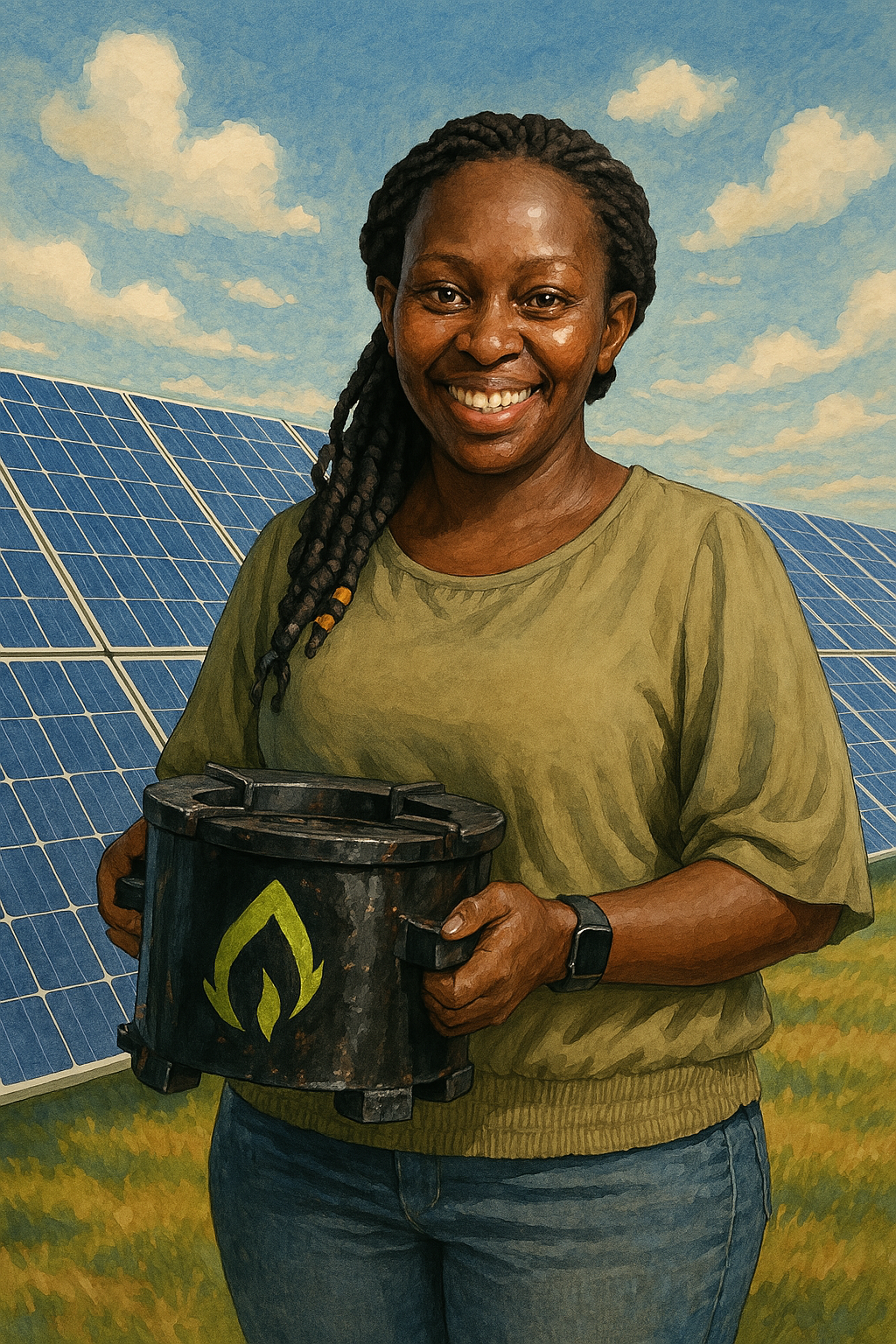
An exploration of how African innovators and nations are reshaping the continent's energy future
In the bustling corridors of innovation across Africa, a quiet revolution is taking place. From the slums of Nairobi to the presidential palaces of West Africa, a new narrative is emerging—one where Africans are not merely recipients of aid or extractors of raw materials, but pioneers of sustainable solutions and masters of their own resources. This is the story of Africa's energy renaissance, told through three interconnected pillars: individual innovation, community impact, and national sovereignty.
Pillar One: Individual Innovation - The Charlot Magayi Story
The story begins in Mukuru, one of Nairobi's largest slums, where tragedy sparked innovation. Orphaned at the age of 10, Charlot grew up in Mukuru, one of the biggest slums in Nairobi, and became a mother at age 16. It was a moment of profound personal pain that would eventually transform thousands of lives.
Charlot's innovation wasn't just about creating a product—it was about reimagining how everyday technology could serve African communities. Mukuru Clean Stoves uses recycled metal to manufacture improved cookstoves and agricultural waste to manufacture mosquito repellent fuel. By utilizing waste materials, she created a circular economy model that addresses multiple challenges simultaneously: waste management, affordable energy, and environmental protection.
Mukuru Clean Stoves Performance
The technical achievements of her stoves are remarkable. The stove she designed sells for an affordable $10, and it reduces pollution to 10% compared with traditional cooking and it uses much less charcoal. But the real innovation lies in understanding her community's needs.
Pillar Two: Community Impact - Transforming Lives at Scale
The power of Charlot's innovation extends far beyond a single product. Her clean stoves represent a comprehensive approach to community health and empowerment.
The health impact alone is staggering. In a continent where household air pollution from cooking fires kills more people annually than malaria, the reduction in toxic emissions represents a fundamental shift in how communities approach daily life. The 40% reduction in burn risks for children under five addresses one of the most heartbreaking aspects of traditional cooking methods—the vulnerability of the continent's youngest citizens.
But the innovation's impact extends beyond health. This model demonstrates how technological innovation can become a vehicle for economic empowerment, particularly for women who have historically been excluded from formal economic opportunities.
Pillar Three: National Sovereignty - Reclaiming Africa's Resources
While individual innovators like Charlot are transforming communities, African nations are simultaneously reclaiming control over their vast natural resources. This movement toward resource sovereignty represents a fundamental shift in how African countries approach economic development and energy security.
Under Ibrahim Traoré's leadership, Burkina Faso has reportedly earned $18 billion from its gold mines, marking a dramatic shift from the country's previous mining revenue structure.
Gabon is set to stop exporting raw manganese by 2029, as part of a national strategy to boost local industry and reduce dependency on unprocessed resource exports.
This transformation in Burkina Faso represents more than just a change in government—it embodies a new philosophy toward resource management. The country, whose name translates to "the land of upright people," is living up to its name by ensuring that its natural wealth serves its citizens rather than foreign shareholders.
Similarly, Gabon is charting a path toward value-addition rather than raw material export. This decision reflects a broader understanding that providing the policy and political stability necessary to develop processing facilities that turn raw metal ores into refined, usable products, would allow these countries to create good manufacturing jobs and expand economic opportunities in the service sector.
The Interconnected Renaissance
The stories of Charlot Magayi and leaders like Ibrahim Traoré might seem disconnected, but they represent different facets of the same transformation. At the individual level, African innovators are creating solutions that serve their communities while gaining global recognition. At the national level, African leaders are ensuring that the continent's vast natural wealth serves African development rather than foreign profit margins.
This dual approach—innovation from below and sovereignty from above—creates a powerful synergy. When a young mother in Mukuru can create a globally recognized innovation, it inspires countless others to see entrepreneurship as a viable path to addressing local challenges. When national leaders successfully reclaim control over natural resources, it demonstrates that African nations can chart their own economic destinies.
Looking Forward: The Promise of African Energy Leadership
As we look toward the future, the convergence of individual innovation and national sovereignty positions Africa not as a recipient of development aid, but as a leader in sustainable energy solutions. The continent's abundant solar potential, vast mineral resources, and growing population of young innovators create unprecedented opportunities for energy leadership.
Africans Still Lack Access to Clean Cooking Solutions
The clean cooking sector alone represents a massive opportunity. With over 900 million Africans still lacking access to clean cooking solutions, innovators like Charlot are addressing a market need that extends far beyond their immediate communities. As these solutions scale and improve, they position Africa as a global leader in sustainable cooking technology.
Similarly, the movement toward resource sovereignty creates opportunities for African nations to become centers of value-added manufacturing rather than simply suppliers of raw materials. This transformation could fundamentally alter global supply chains while creating millions of jobs across the continent.
The Future is African-Led
From the slums of Nairobi to the presidential palaces of Ouagadougou and Libreville, a new generation of African leaders—both individual and institutional—are proving that the continent's time has come. The future of African energy isn't just bright—it's illuminated by the innovations and sovereignty of Africans themselves.
