

Fifth UN Conference on the Least Developed Countries (LDC-V), Doha, Qatar, 5-9 March 2023
The concept of Least Developed Countries (LDCs) was first introduced by the UN in 1971. Despite international commitments and programs aimed at addressing poverty in these countries, LDCs remain some of the poorest and most vulnerable economies in the world. LDCs account for only 1.3% of global GDP and receive very little foreign investment or exports. Every ten years, the UN organizes conferences for LDCs, but the results achieved so far are weak. The first conference in 1981 led to the adoption of the Special New Programme of Action for LDCs, and in 1990, the international community committed to integrating LDCs into the international trading system

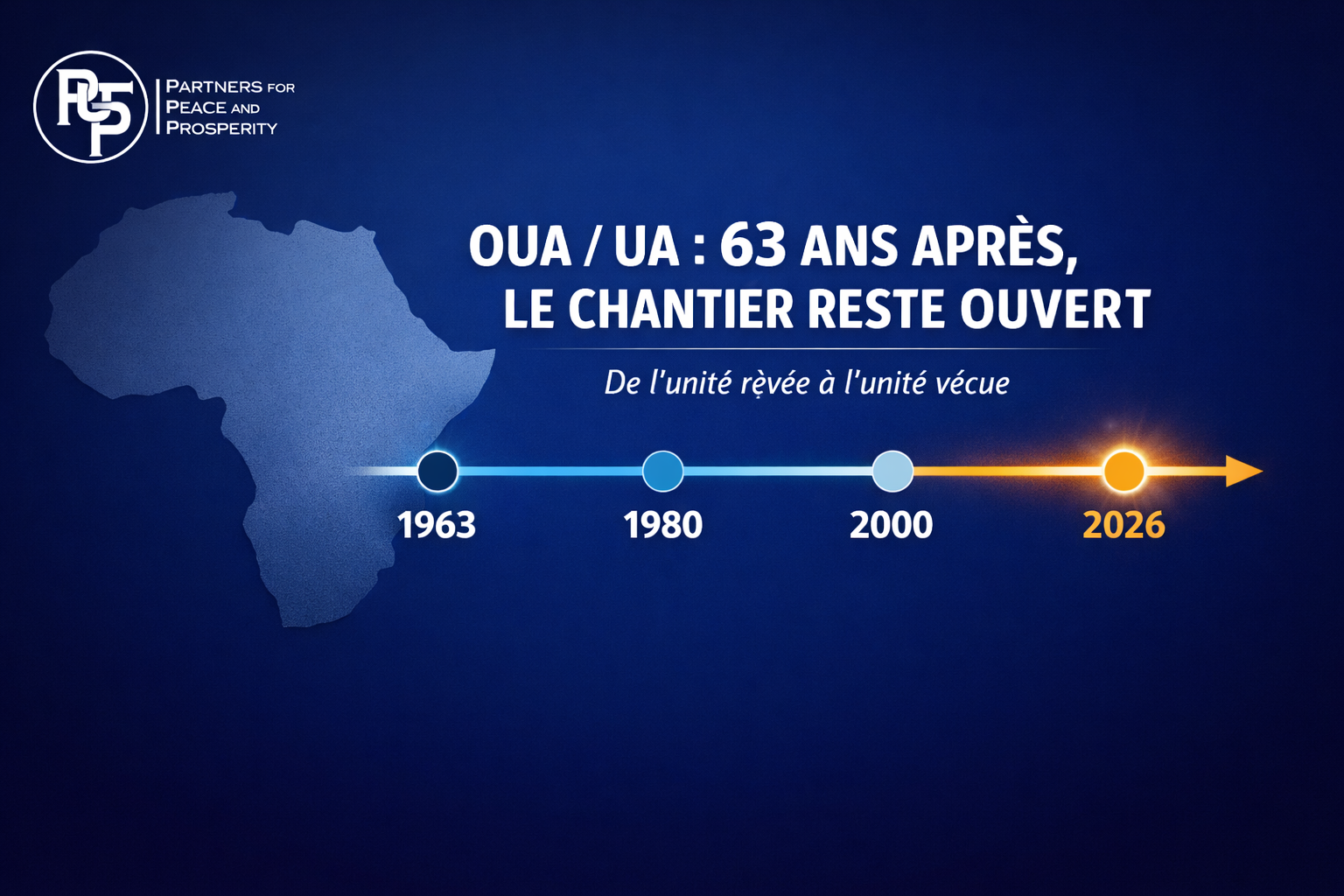
OUA/UA: Quel Bilan pour les 60 ans ?
Dans quelques mois, l'Union Africaine célébrera ses 60 ans, mais les États-Unis d'Afrique sont toujours inachevés malgré des programmes ambitieux. Les récentes crises ont mis en évidence les vulnérabilités du continent, et un rapport prévoit une crise mondiale imminente qui pourrait causer des troubles civils généralisés. Cet article se demande si l'Union Africaine peut protéger l'Afrique et quand les États-Unis d'Afrique deviendront réalité


(For Mails Only):
9856 Towneway Dr.,
El Monte, CA 91733
info@partners-for-peace.com
(810) 796 5764
An in‑depth exploration of South Africa’s rising xenophobia and its stark contradiction to Ubuntu — the philosophy of shared humanity that shaped Mandela’s Rainbow Nation. Through history, data, and personal stories, this article exposes how anti‑migrant violence betrays Africa’s legacy of solidarity.”